

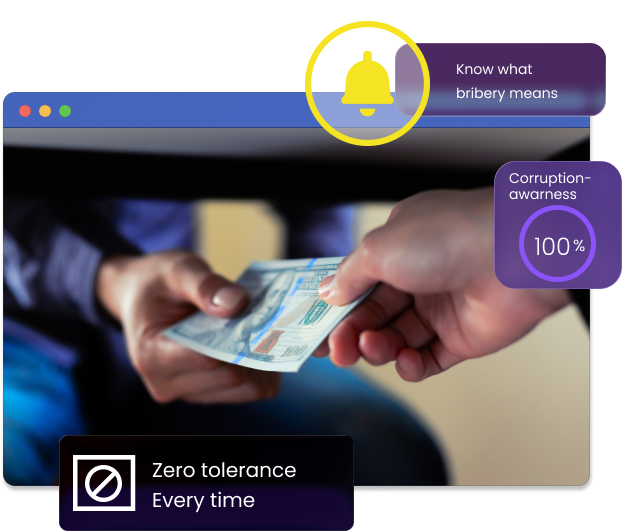
Course Curriculum
Recognise the risk.
Know what to do.
- How bribery and corruption show up at work
- Everyday situations where the risk arises
- Why it is not always obvious in the moment
- The difference between bribery and corruption
- When gifts and hospitality become a bribery risk
- What the policy says about gifts and entertainment
- Facilitation payments and why they are prohibited
- How to identify when something has crossed a line
- Your individual responsibilities under the law
- What anti-bribery policy requires of your role
- Responsibilities that apply regardless of seniority
- How location affects your legal obligations here
- What to do when you face a potential risk
- How to protect yourself in the moment it arises
- When to involve others and who to tell first
- Documenting concerns and why it matters here
- Reporting channels for bribery and corruption
- Protections available when you raise a concern
- Consequences of non-compliance for individuals
- What happens after a concern is reported here


Outcomes
Build organisations where bribery and corruption risk is recognised, refused, and reported. Outcomes that strengthen compliance culture and reduce exposure across everyday business interactions.
Bribery risk is highest when employees cannot recognise it. This course gives every employee the awareness to identify risk in the everyday situations where it most commonly arises, including gifts, hospitality, and payments, reducing the likelihood that a routine interaction becomes a serious compliance failure.
Compliance culture is built through individual understanding, not just policy documents. This course connects the organisation’s anti-bribery obligations to each employee’s daily decisions, creating a shared sense of responsibility that makes ethical behaviour the default rather than the exception under pressure.
Inconsistency in how bribery risk is assessed and handled creates gaps that exposure exploits. This course gives employees a consistent framework for identifying and responding to risk, so that the decisions made across teams and locations reflect the same standard of ethical judgement and legal awareness.
Bribery and corruption risks that go unreported compound quickly into serious liability. This course removes the uncertainty and hesitation that delay reporting, giving employees a clear understanding of what to report, how to report it, and the protections that apply when they choose to raise a concern.