
Course Curriculum
Managing time in remote work
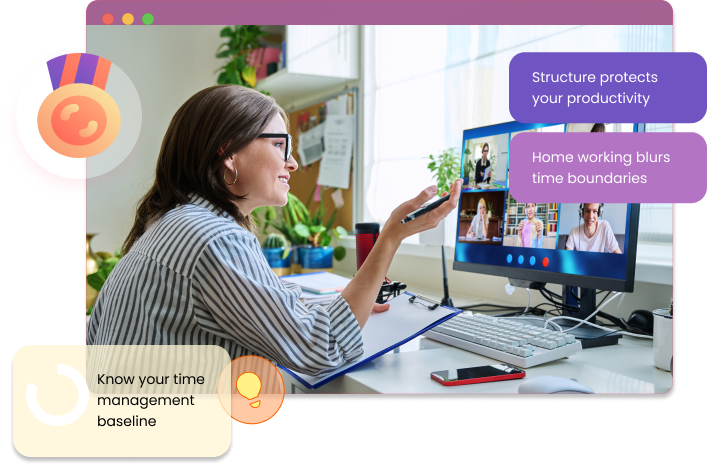
- How remote work changes time use
- Common focus challenges at home
- Why work hours often extend unnoticed
- Impact of blurred work boundaries
- Identifying urgent and important work
- Balancing workload with available time
- Avoiding overcommitment in planning
- Making realistic daily task plans
- Defining clear start and end times
- Communicating availability to others
- Separating work and personal time
- Avoiding work spilling into evenings
- Reducing interruptions during work hours
- Managing notifications and alerts
- Creating a focused work environment
- Handling unexpected disruptions at home
- Creating a consistent daily schedule
- Planning work across the week
- Balancing focused work and breaks
- Reviewing and adjusting routines regularly

Outcomes
Stronger time management that improves productivity, balance, and consistency. Outcomes that show up in how employees plan and manage their work.
Productivity often drops when time is not structured clearly in remote work settings. This course helps employees build practical habits that improve focus and reduce wasted effort. As employees manage their time more effectively, they are able to complete tasks more consistently. This leads to better output and more reliable performance across remote workdays.
Working from home can lead to longer hours and difficulty disconnecting. This course helps employees set clear boundaries and manage workload in a sustainable way. As work patterns become more balanced, employees are less likely to experience ongoing fatigue. This reduces the risk of burnout and supports long term wellbeing at work.
Employees often take on more work than they can realistically manage. This course helps build awareness of capacity and supports better planning of tasks and priorities. As workload becomes more balanced, employees are able to manage responsibilities without constant pressure. This leads to more stable and manageable workdays over time.
Short bursts of productivity are difficult to maintain without structure. This course helps employees build routines that support consistent performance rather than irregular output. As routines become more stable, employees are able to maintain focus and effectiveness across longer periods. This results in steady and sustainable performance over time.