Course Curriculum
Stay calm.
Keep everyone safer.
- Early signs that a situation is escalating
- Tone, body language, and behavioural signals
- How escalation builds and why catching it early matters
- Why the earliest signs are the easiest to miss
- Core de-escalation techniques that work at work
- Using language and tone to reduce tension
- Body language that calms rather than inflames
- What to avoid when trying to de-escalate here
- How tone shapes the direction of a situation
- Language choices that reduce or increase risk
- Non-verbal cues and the signals they send
- Small communication shifts that change outcomes
- Managing your own response under real pressure
- Staying clear and calm when stakes feel high
- Techniques for regulating stress in the moment
- What calm looks like and how to project it
- Recognising when de-escalation is not enough
- Who to involve and when to call for support
- How to seek help without leaving someone at risk
- What happens after you hand a situation over


Outcomes
Build workplaces where conflict is recognised early and managed with skill. Outcomes that reduce escalation, protect people, and improve how teams handle pressure.
Most workplace conflicts escalate because no one intervenes at the right moment with the right approach. This course gives employees the awareness to spot tension early and the techniques to respond before a manageable situation becomes a serious incident requiring formal intervention.
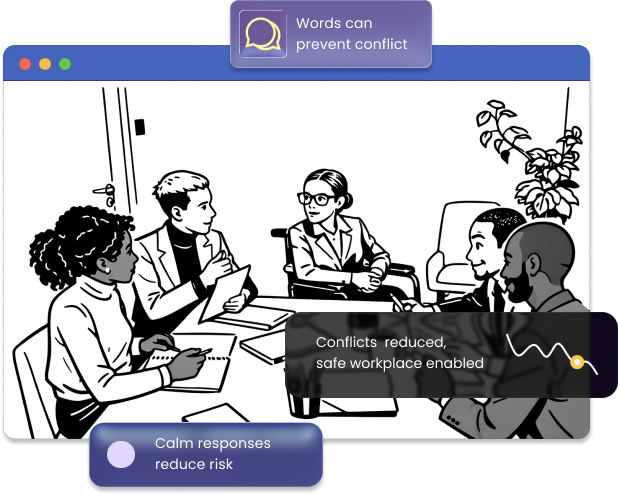
Safety in workplace interactions is not just about physical risk. This course builds the communication skills that make difficult interactions less likely to become dangerous, helping employees navigate tension, disagreement, and distress in ways that protect everyone involved.
Pressure changes how people communicate, often for the worse. This course helps employees understand their own stress responses and develop the habits that allow them to stay calm, clear, and effective even in moments that feel overwhelming, reducing the chance that their reaction makes things worse.
De-escalation starts with noticing. This course sharpens employees’ ability to read situations accurately, pick up on early warning signals, and adjust their approach before tension peaks, building the kind of situational awareness that makes workplaces meaningfully safer over time.