



Custom, gamified courses designed for your team’s context
Data-driven insights to personalise learning and boost performance
Expert-led, localised learning built on research and relevance
Featured
Avert risks and stay updated on your statutory responsibilities
Implement changes that enhance productivity and collaboration
Enable responsible and productive AI adoption at work
Featured
Curated insights and resources powering productive teams
Quick reads with practical insights for everyday work
Reports
In-depth research and analysis on workplace trends
Real stories showing impact and transformation
Conversations with experts shaping the future of work
Micro-learnings that spark learning and collaboration
Interactive sessions exploring workplace trends, learning, and the future of work
Featured
A team of experts collaborating to make workplace better
Make an impact. Build the future
Explore our global client footprint and impact
Featured
Use AI to support workplace communication while keeping messages human-led through thoughtful review and judgment.
Learn to use AI in hiring with care by combining smart tools and human judgment to support transparent recruitment decisions
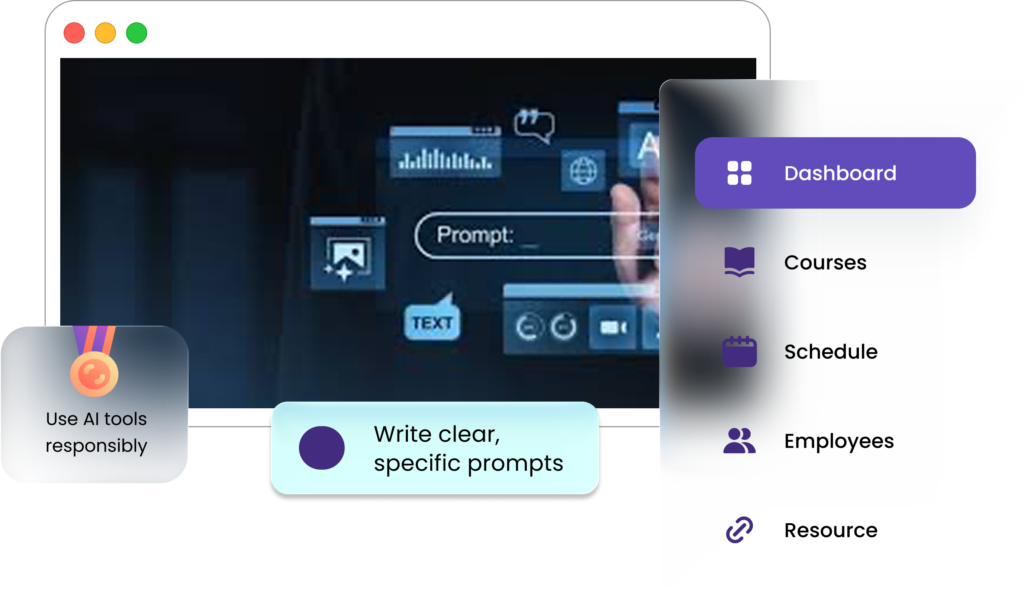
Learn to write clear AI prompts by adding context and refining instructions so outputs are accurate, useful and reliable for everyday work
AI tools are sometimes used to draft responses, suggest next steps, or summarise customer information, but misuse can cause errors.
Custom, gamified courses designed for your team’s context
Data-driven insights to personalise learning and boost performance
Expert-led, localised learning built on research and relevance
Avert risks and stay updated on your statutory responsibilities
Implement changes that enhance productivity and collaboration
Enable responsible and productive AI adoption at work
Curated insights and resources powering productive teams
Quick reads with practical insights for everyday work
Reports
In-depth research and analysis on workplace trends
Real stories showing impact and transformation
Conversations with experts shaping the future of work
Micro-learnings that spark learning and collaboration
Interactive sessions exploring workplace trends, learning, and the future of work
A team of experts collaborating to make workplace better
Make an impact. Build the future.
Explore our global client footprint and impact
Featured