

Course Curriculum
Seeing colleagues beyond labels
- Why the brain creates quick labels
- How early impressions shape expectations
- Where stereotypes show up at work
- Why they feel accurate but often are not
- How work gets assigned based on assumptions
- How feedback is shaped by expectations
- Patterns in who gets visible opportunities
- When decisions are not based on evidence
- Why first impressions can be misleading
- Using questions to understand colleagues better
- Slowing down quick judgments at work
- Looking beyond visible traits and roles
- Pausing before making quick decisions
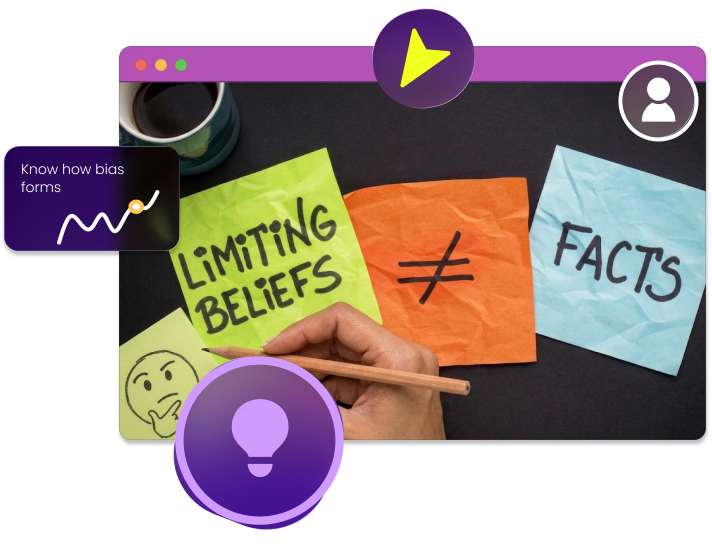
- Separating facts from assumptions
- Testing your thinking before acting
- Avoiding decisions based on partial views
- Focusing feedback on observable actions
- Avoiding generalised or vague comments
- Using examples to support your feedback
- Keeping feedback fair across the team

Outcomes
Better decision making that improves fairness, accuracy, and team performance. Outcomes that show up in how work is assigned and evaluated.
Stereotypes often limit who gets certain types of work, leading to underuse of available talent. This course helps employees recognise those patterns and make more informed decisions about who is capable of what. As a result, teams make better use of the full range of skills available to them. This leads to stronger output and more balanced contribution across the team.
Work allocation can be shaped by assumptions rather than actual capability. This course builds awareness of how those patterns form and helps employees assign work based on skills and readiness instead. Over time, this leads to more equitable distribution of opportunities and responsibilities across the team. This ensures that decisions about work are consistent and based on clear reasoning.
Stereotypes can create distance between colleagues by reinforcing narrow views of who people are. This course helps employees move beyond labels and engage with each other more openly and accurately. As understanding improves, teams build stronger relationships grounded in respect rather than assumption. This creates a more connected and collaborative working environment.
When assumptions go unchecked, employees may be overestimated or underestimated in ways that affect performance and growth. This course helps employees base their judgments on evidence, reducing errors in how capability is assessed. As a result, decisions about feedback, development, and opportunities become more accurate. This leads to fairer evaluations and better long term development outcomes.