
Course Curriculum
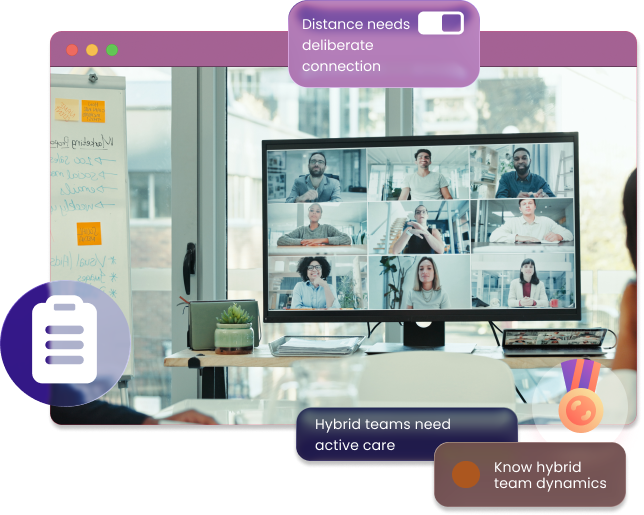
Key skills for every strong hybrid team
- Why hybrid communication tends to break down
- Making information flow across locations
- Getting remote and in-person voices both heard
- Communication habits that hold in hybrid teams
- What good hybrid feedback looks like at work
- Active listening in a hybrid team setting
- Feedback across time zones and locations
- How to make feedback a regular hybrid habit
- How distance and misalignment create conflict
- The early warning signs of team friction
- How to address conflict before it escalates
- Rebuilding trust after hybrid team conflict
- How distance and misalignment create conflict
- The early warning signs of team friction
- How to address conflict before it escalates
- Rebuilding trust after hybrid team conflict
- Why hybrid teams lose engagement over time
- Connecting people across roles and locations
- Supporting inclusion across all the time zones
- Recognition that reaches every team member

Outcomes
Built for teams navigating real hybrid challenges. Outcomes in collaboration, reduced silos, improved team engagement, and sustained performance.
When remote and in-person team members operate in separate information bubbles, collaboration breaks down fast. This course builds the communication habits, feedback practices, and meeting behaviours that keep every part of the team connected, informed, and genuinely working together rather than alongside each other.
Silos in hybrid teams form quickly and quietly, often without anyone intending them. This course helps teams recognise the patterns that create distance and misalignment, and gives managers and team members the practical tools to close those gaps before they calcify into entrenched divisions that slow everything down.
Engagement drops when people feel invisible. Remote team members disengage when their voices go unheard, their contributions go unrecognised, and no one notices. This course helps managers build the awareness and habits that keep everyone in the team seen, valued, and genuinely connected to the work and to each other.
Accountability is harder when teams are distributed. Standards drift, expectations blur, and follow-through becomes inconsistent. This course gives managers the structure to hold performance conversations clearly and consistently across locations, so results do not depend on who happens to be in the office that day.