

Course Curriculum
Key skills for managing stress and burnout
- What burnout is and how it develops slowly
- The difference between stress and burnout
- The early warning signs that burnout is forming
- Why people often miss the early warning signs
- How unclear priorities contribute to stress
- What emotional overload looks like at work
- Other common burnout contributors at work
- How to trace stress back to its real source
- Why boundaries matter more when under pressure
- How to set a clear boundary comfortably
- Saying what you need without apologising
- Handling workload expectations that are too high
- Why daily habits protect more than big resets
- How breaks genuinely restore your energy
- Realistic planning that reduces stress buildup
- Checking in with yourself to catch stress early
- What good recovery means for your performance
- How to recharge after an intense period of work
- The trap of working through your recovery time
- How to build recovery into your work planning


Outcomes
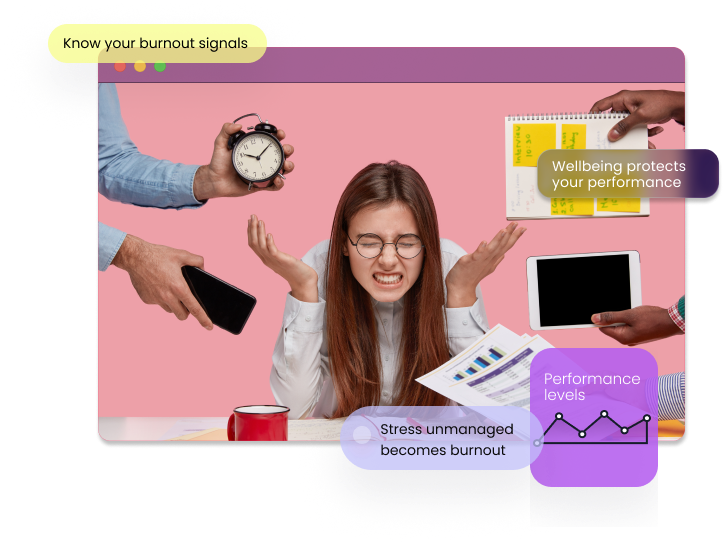
Burnout is rarely sudden. It builds gradually through accumulated pressure, unclear expectations, and the absence of recovery. This course addresses each of those factors directly, giving employees the language to name what they are experiencing, the awareness to catch it early, and the practical tools to change course before it becomes a serious health or performance problem.
Stress-related absence is rarely the result of a single event. It is the outcome of sustained pressure that was not addressed, boundaries that were not set, and recovery that did not happen. This course builds the habits and self-awareness that reduce the likelihood of reaching that point, so employees stay present, functional, and better able to sustain their contributions over time.
Short bursts of high output followed by burnout and absence are not productive. Genuine productivity over time depends on managing pressure, maintaining energy, and recovering between intense periods. This course teaches the habits that make sustained performance possible, replacing the boom-and-bust cycle with steadier, more resilient ways of working.
Many people struggle not because they are incapable but because they have never been shown how to manage their workload in a way that protects them from overload. This course gives employees practical tools for prioritising, communicating needs, setting limits, and planning realistically, so they can manage what is asked of them without sacrificing their wellbeing.