Course Curriculum
Working better across every generation
- What shaped each generation working today
- Why work expectations differ by generation
- The role of context in forming work values
- Moving from assumption to genuine insight
- How communication styles differ by generation
- Where generational miscommunication occurs most
- Closing the gap without losing your own style
- How feedback lands across generational lines
- What stereotypes do to a mixed-age team
- The assumptions that cause the most friction
- Practical tools for reducing team tension
- Team norms that hold across all generations
- What cross-generational collaboration means
- Hybrid work and its effect on team dynamics
- Generational difference as a team strength
- Structures that enable cross-generational work
- How disengagement shows across generations
- Early signs that someone is pulling away
- How to respond to disengagement without blame
- What keeps each generation engaged at work

Outcomes
Built on real generational friction. Outcomes in cross-generation collaboration, reduced friction, team engagement, and better people retention.
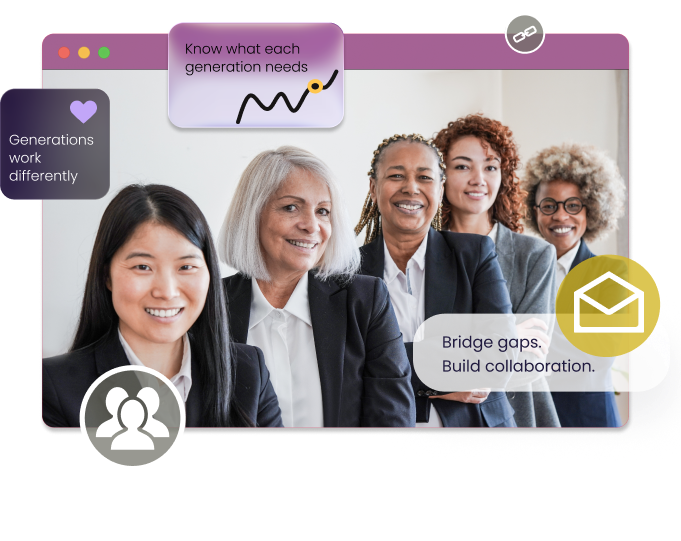
When teams only see the differences between generations, they miss the opportunities. This course gives managers and teams a shared language for working across generational lines, building the habits and structures that turn difference into a genuine source of collaboration and strength rather than a source of daily friction.
Most generational friction comes from assumptions that were never tested. This course names those assumptions directly, helps teams understand what shaped different expectations, and gives managers practical tools to reduce the tension that slows collaboration before it builds into something more serious.
Disengagement often looks different across generations, which makes it easy to miss or misread. This course helps managers spot the early signs, understand what is driving withdrawal across different age groups, and respond in ways that rebuild motivation and bring people back into the team rather than pushing them further out.
People leave when they feel misunderstood. This course helps managers create the conditions where each generation feels seen and valued, improving the day-to-day experience of work in ways that reduce early exits and keep the people worth keeping for longer.