Course Curriculum
Writing better prompts for AI
- How bribery and corruption show up at work
- Everyday situations where the risk arises
- Why it is not always obvious in the moment
- The difference between bribery and corruption
- When gifts and hospitality become a bribery risk
- What the policy says about gifts and entertainment
- Facilitation payments and why they are prohibited
- How to identify when something has crossed a line
- Your individual responsibilities under the law
- What anti-bribery policy requires of your role
- Responsibilities that apply regardless of seniority
- How location affects your legal obligations here
- What to do when you face a potential risk
- How to protect yourself in the moment it arises
- When to involve others and who to tell first
- Documenting concerns and why it matters here
- Reporting channels for bribery and corruption
- Protections available when you raise a concern
- Consequences of non-compliance for individuals
- What happens after a concern is reported here


Outcomes
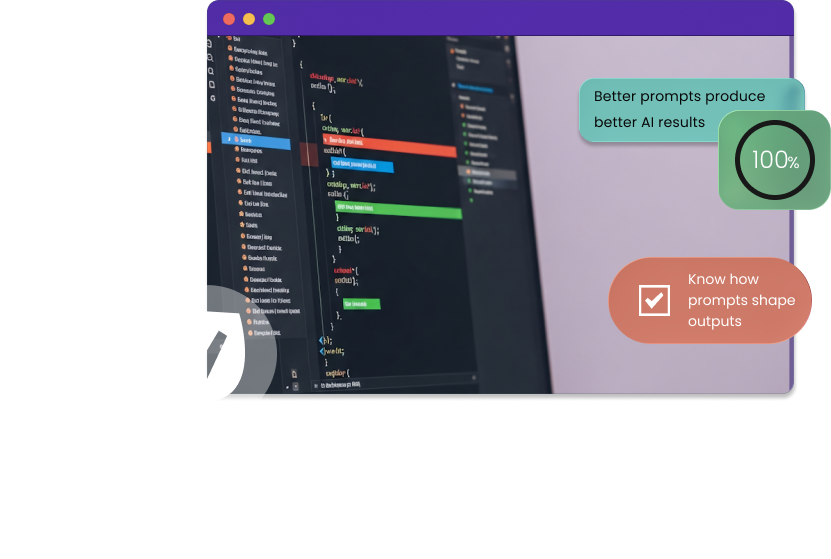
Stronger prompt writing that improves accuracy, efficiency, and reliability. Outcomes that show up in everyday AI use.
AI outputs improve significantly when prompts are clear, specific, and structured with the right level of detail. This course helps employees understand how to write better prompts, refine them based on results, and guide AI more effectively. Over time, outputs become more accurate, relevant, and aligned with the task, reducing the need for repeated attempts or corrections.
AI becomes more reliable when employees know how to guide it and review outputs before using them. This course helps build consistent habits of writing clear instructions, adding context where needed, and checking results carefully. As a result, AI is used more confidently and predictably, with fewer unexpected or unusable outcomes.
Efficiency improves when employees are able to get useful outputs in fewer attempts instead of rewriting prompts multiple times. This course helps employees structure prompts better and refine them quickly when results are not useful. Over time, tasks are completed faster, with less time spent correcting or reworking AI-generated content.
Rework often happens when AI outputs are incomplete, unclear, or not aligned with the task requirements. This course helps employees identify these issues early, refine prompts, and verify outputs before using them in work. As a result, the need to redo work reduces, improving productivity and ensuring more consistent output quality.