

Course Curriculum
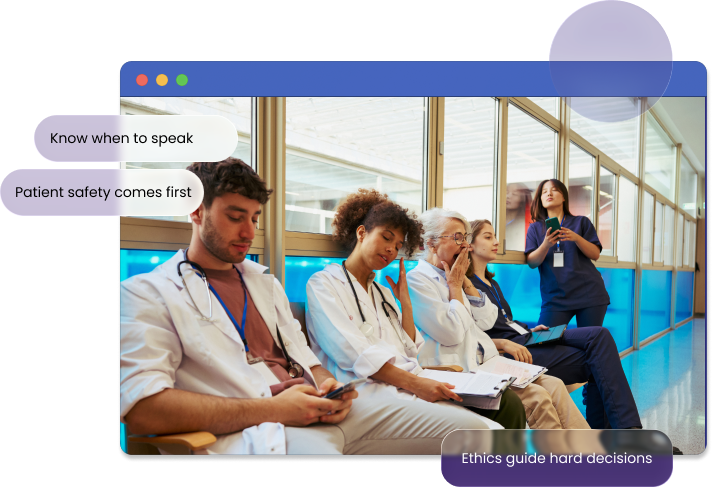
Patient safety must always come first.
- Ethical dilemmas specific to healthcare settings
- Why clinical hierarchies complicate decision-making
- The tension between protocol and patient safety
- Why these dilemmas require a specific approach
- When patient safety overrides other obligations
- Professional responsibility and what it requires
- Navigating pressure from hierarchy and peers
- What balanced ethical judgement looks like here
- When raising a concern is clearly the right call
- How to raise concerns safely within your org
- Reporting channels available to healthcare staff
- What protections apply when you speak up here
- How to support a colleague who speaks up
- Responding without making the situation worse
- When and how to step in on someone’s behalf
- Building a culture where speaking up is normal
- Applying ethical frameworks to real scenarios
- Practical judgement in high-pressure situations
- Making decisions when the right path is unclear
- Reflecting on decisions and learning from them


Outcomes
Build healthcare teams where ethical concerns are raised, heard, and acted on. Outcomes that improve patient safety and strengthen clinical accountability for good.
Patient safety depends on people being willing and able to speak up when something is wrong. This course removes the barriers that prevent healthcare staff from raising concerns early, giving them the confidence, knowledge, and frameworks to act before unsafe practices cause preventable harm.
Risks that go unreported in clinical settings compound quickly. This course gives healthcare teams a clear understanding of when and how to report, removing the hesitation that delays action, and building the habit of early reporting as a professional and ethical standard rather than an exceptional act.
Ethical distress occurs when people know what is right but feel unable to act on it. This course addresses that gap directly, giving healthcare staff the tools to navigate dilemmas, the language to raise concerns, and the confidence that doing so is both supported and expected within their organisation.
Clinical accountability is not just about individual decisions. It is about the culture that surrounds them. This course builds the shared sense of responsibility that makes teams hold each other to high ethical standards, creating environments where patient safety is genuinely everyone’s priority.