

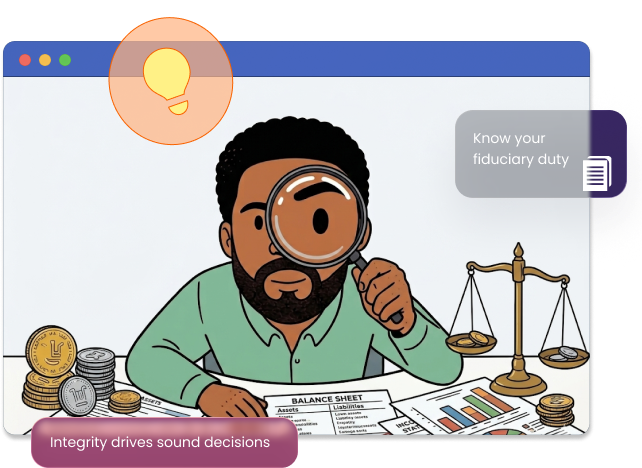
Course Curriculum
Finance decisions carry ethical weight.
- Ethical dilemmas specific to financial roles
- Reporting accuracy and where integrity is tested
- Approvals, payments, and where risk enters
- Conflicts of interest in day-to-day finance work
- How targets and pressure shape financial judgement
- Incentive structures and the risk they can create
- Recognising when pressure is influencing decisions
- What to do when you feel pushed toward compromise
- Structured frameworks for ethical financial decisions
- Assessing ethical and legal risk in practice
- Applying structured thinking under time pressure
- When a framework tells you to pause and check
- Red flags in reporting and financial documentation
- Signs that a practice may be misleading or improper
- Practices that get normalised and why that is risky
- What to do when you notice something is wrong
- Balancing performance goals with compliance needs
- Holding the integrity line when results pressure rises
- What compliant, transparent decisions look like here
- Making accountability part of your daily practice


Outcomes
Build finance teams that make decisions with integrity, consistency, and transparency. Outcomes that reduce misconduct, improve risk detection, and strengthen financial accountability.
Financial misconduct rarely starts with deliberate fraud. It starts with small compromises made under pressure, without a clear ethical framework to push back against. This course gives finance professionals the awareness and tools to recognise those moments and make better decisions before small lapses become serious failures.
Integrity in financial roles requires more than rule-following. It requires the judgement to recognise risk before it is obvious and the confidence to act on it. This course builds both, giving finance professionals the ethical grounding to maintain high standards consistently, even when targets, timelines, and pressures make that harder.
Consistency is what separates strong financial governance from vulnerable governance. This course gives every finance professional a shared framework for ethical decision-making, producing more predictable, defensible outcomes across reporting, approvals, and vendor relationships regardless of who is making the call.
Risk that is not detected is risk that compounds. This course sharpens the ability of finance professionals to spot the red flags, unusual patterns, and subtle signals that indicate something may be wrong, creating the early detection habits that allow organisations to address problems before they escalate into serious liability.