
Course Curriculum
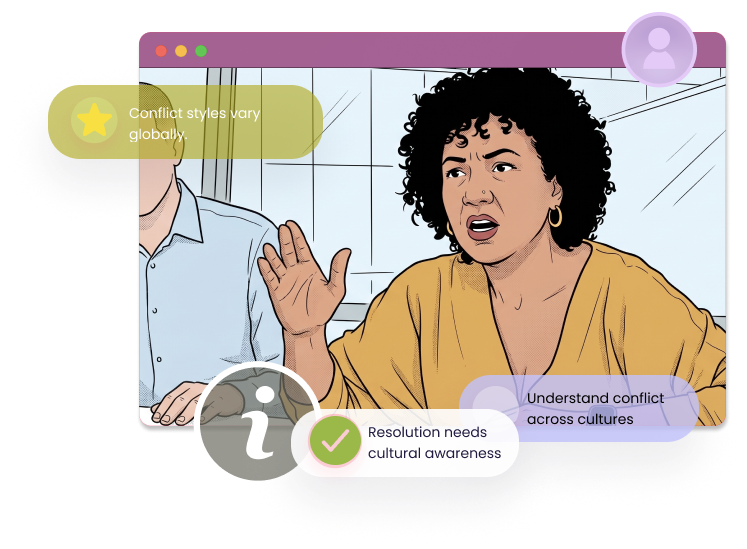
Handling conflict across cultures
- How people show disagreement in different ways
- When silence may signal disagreement or respect
- How tone can be read in different ways
- Where feedback styles vary across cultures
- Listening beyond words to understand intent
- Not assuming meaning too quickly in conflict
- Checking understanding before responding
- Not reacting only to tone or delivery
- Responding without dismissing different styles
- Respecting hierarchy where it matters
- Adjusting tone to match the situation
- Avoiding responses that escalate tension
- When to be direct and when not to
- Matching approach to cultural expectations
- Avoiding one style for every situation
- Keeping conflict focused on the issue
- Helping teams find common ground
- Bringing different views into one discussion
- Keeping focus on shared outcomes
- Moving from disagreement to resolution

Outcomes
Stronger conflict management that improves resolution, reduces tension, and supports collaboration across cultures.
Cultural differences in communication can cause small disagreements to escalate into larger conflicts when intent is misunderstood. This course helps leaders recognise these differences early and respond with awareness. Over time, conflicts reduce as leaders are better able to interpret behaviour accurately and address issues before they grow.
When conflict is not handled well, it can take longer to resolve and affect team productivity. This course helps leaders listen more effectively, respond appropriately, and guide conversations toward clarity. As a result, conflicts are resolved more quickly, with fewer delays and less impact on team progress.
Unresolved or poorly handled conflict can weaken trust across global teams. This course helps leaders manage disagreements in a way that maintains respect and understanding. Over time, relationships improve as teams feel heard, valued, and more comfortable working through differences together.
Leaders often need to mediate between team members with very different communication styles. This course helps leaders bring those perspectives together and guide discussions toward shared solutions. As a result, mediation becomes more effective, balanced, and focused on outcomes that work across cultures.