

Course Curriculum
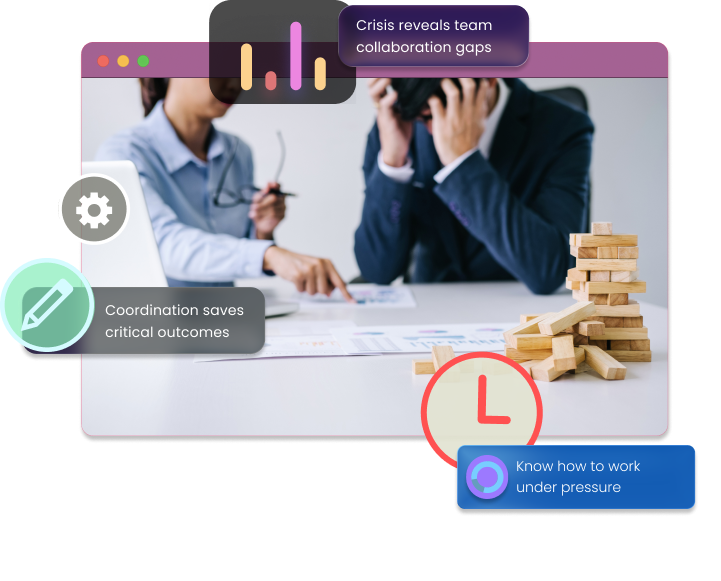
Working effectively under pressure
- What information needs urgent escalation
- How to communicate clearly under pressure
- Avoiding overload in urgent team updates
- Keeping messages consistent across teams
- Making decisions with incomplete inputs
- Aligning quickly across key stakeholders
- Avoiding delays caused by overanalysis
- Clarifying ownership in fast decisions
- Listening actively when teams are stressed
- Communicating uncertainty with clarity
- Building trust through visible transparency
- Supporting team confidence during disruption
- Responding to mistakes without blame
- Preventing escalation during pressure
- Keeping discussions focused on solutions
- Managing emotional reactions in teams
- Communicating with calm and clarity
- Reinforcing direction during uncertainty
- Recognising effort in high-pressure work
- Keeping teams focused on priorities

Outcomes
Stronger crisis response that improves speed, clarity, and coordination. Outcomes that show up in how teams act under pressure.
In crisis situations, delays in communication and unclear ownership can slow down response and increase risk. This course helps teams share critical information quickly, prioritise what matters, and act without unnecessary hesitation. As a result, responses become faster, more coordinated, and better aligned with the needs of the situation.
When pressure is high, teams often struggle to stay aligned and make decisions together. This course helps employees build habits that support quick alignment, clear roles, and efficient decision making. Teams coordinate more effectively across functions, reducing duplication, confusion, and gaps in response during critical moments.
Unclear communication and lack of direction can quickly lead to panic and confusion during crises. This course helps employees communicate with clarity, acknowledge uncertainty without escalating fear, and keep information structured. Teams stay more focused, reducing unnecessary stress and maintaining a steady response even in fast-changing situations.
Repeated high-pressure situations can weaken trust and morale if not managed well. This course helps teams handle tension, avoid blame, and support each other through disruption. Over time, this builds resilience, allowing teams to recover quickly, stay engaged, and perform consistently even in challenging conditions.