

Course Curriculum
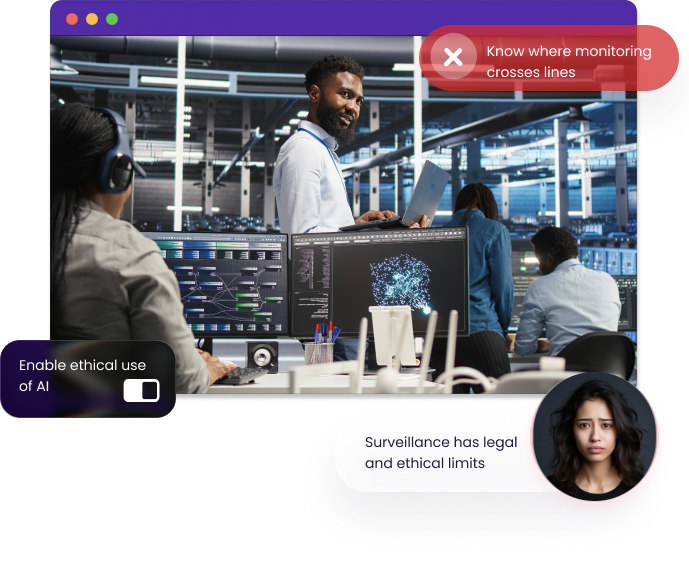
Setting boundaries for AI monitoring
- What monitoring is meant to achieve
- Where monitoring becomes intrusive
- Difference between insight and overreach
- Recognising limits of tracking tools
- Explaining what is being monitored
- Sharing purpose behind tracking clearly
- Addressing employee concerns openly
- Avoiding unclear or hidden practices
- What informed consent looks like
- When consent is required at work
- Communicating consent clearly to employees
- Avoiding assumptions about agreement
- Setting clear rules for data use
- Avoiding misuse of performance data
- Applying policies consistently across teams
- Keeping policies simple and clear
- Balancing tracking with employee privacy
- Respecting boundaries in data collection
- Using data responsibly at work
- Maintaining trust while monitoring


Outcomes
Stronger monitoring practices that improve trust, clarity, and fairness. Outcomes that show up in how tracking systems are used and understood.
Trust is reduced when monitoring feels unclear or excessive. This course helps organisations use tracking tools transparently and responsibly. As practices become clearer, employees understand how and why monitoring is used. This leads to greater trust and confidence in how organisations manage performance data.
Employees are more concerned about monitoring when boundaries are not defined. This course helps set clear limits on what is tracked and how data is used. As transparency improves, concerns about privacy decrease. This leads to a more balanced approach that respects both organisational needs and employee rights.
Transparency is critical for responsible use of monitoring tools. This course helps organisations communicate practices clearly and consistently. As communication improves, employees are better informed about tracking systems. This leads to fewer misunderstandings and more open conversations about monitoring at work.
Clear policies are essential to ensure monitoring is applied fairly. This course helps organisations design simple and consistent guidelines for using data. As clarity improves, misuse of monitoring information is reduced. This leads to more consistent practices and stronger alignment across teams.