






We are back with another week of Data Digest and today we discuss if LGBTQIA+ employees have it harder in corporate?
Well, all the numbers point to a yes.
A study by UCLA School of Law’s Williams Institute finds that 47% of LGBTQ employees in the US have experienced discrimination or harassment at work in their lifetime. This includes being fired, missing job and promotion opportunities due to bias as well as verbal and sexual harassment. Another UCL report found that nearly one in seven UK workers experienced some form of workplace abuse in 2025, with women and LGBTQIA+ employees being most susceptible.
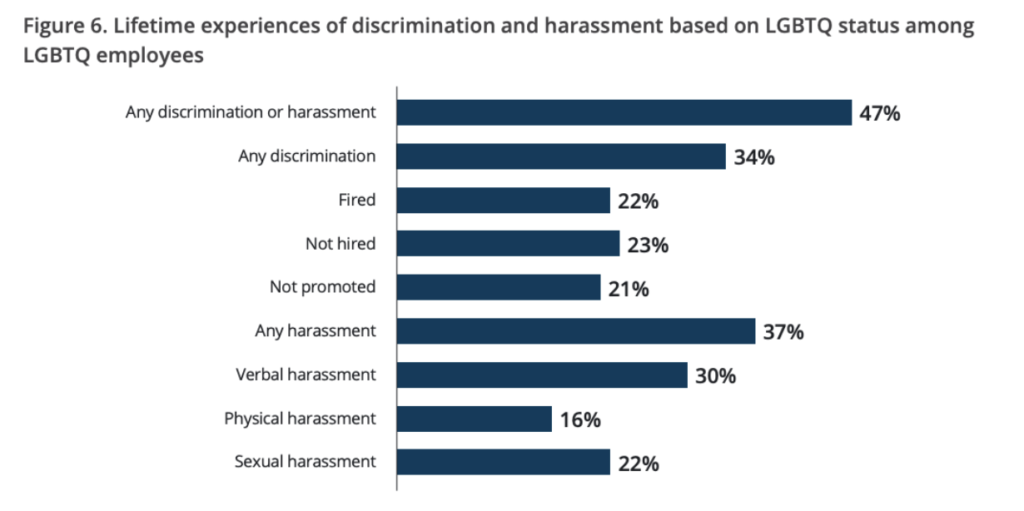
Source: Williams Institute, LGBTQ People’s Experiences of Workplace Discrimination and Harassment 2023
Which part of LGBTQIA+ you identity with determines the harassment
It does not end here. The experience of workplace harassment is interlaced with heteronormativity and racial bias. Trans and nonbinary (TNB) employees report much higher rates discrimination as compared to their cisgender colleagues who also belong to the community. 57–68% of TNB employees report some form of harassment, compared with 45% of cisgender LGBTQIA+ employees.
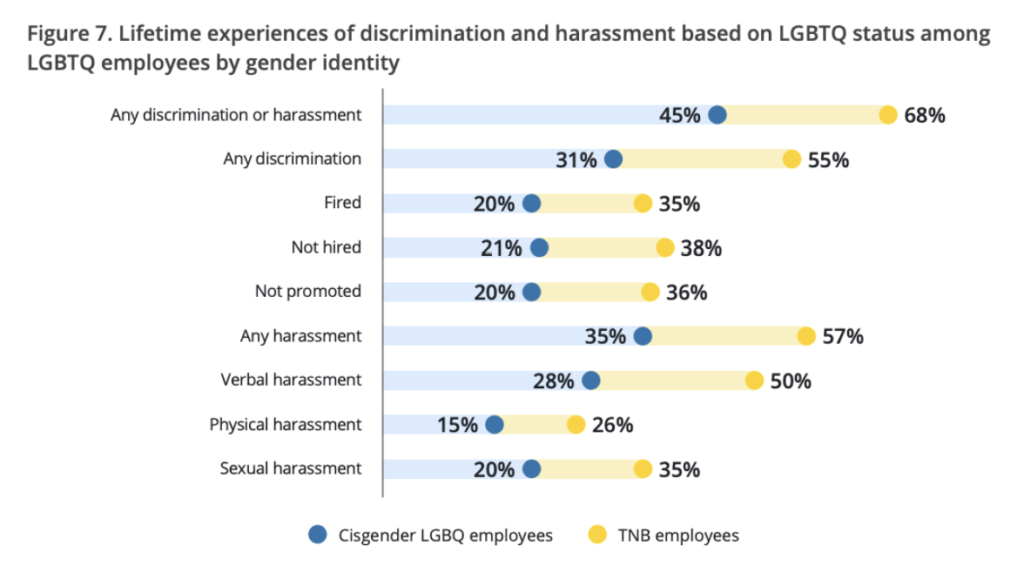
Source: Williams Institute, LGBTQ People’s Experiences of Workplace Discrimination and Harassment 2023
McKinsey’s analysis of transgender workers notes that trans employees feel far less supported than cisgender colleagues (including LGBTQIA+ people who identify with their gender assigned at birth). They face greater difficulty in getting employed, realising advancement opportunities and often lack managerial support.
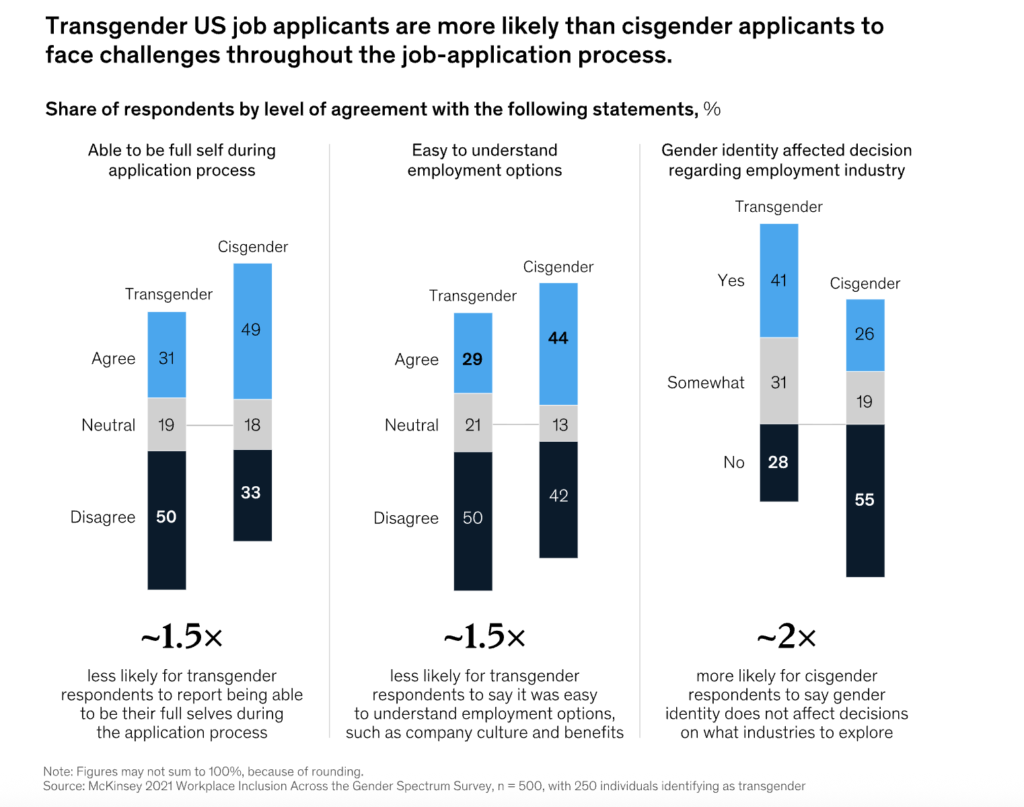
Source: McKinsey, Being transgender at work
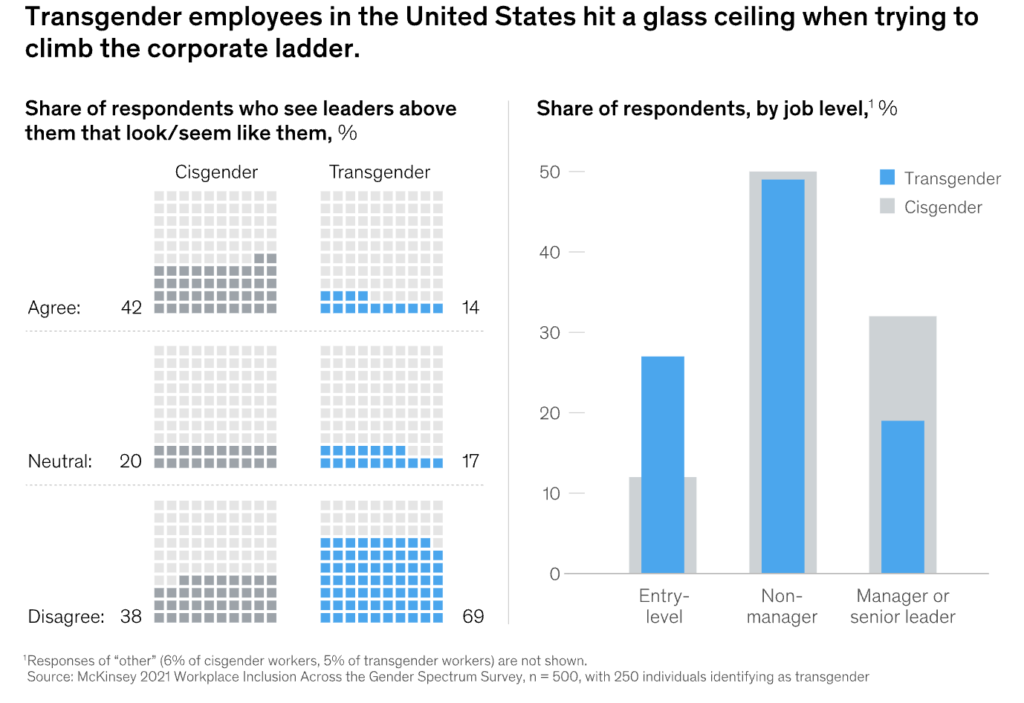
Source: McKinsey, Being transgender at work
LGBTQIA+ employees of colour were also more likely to report experiencing discrimination and harassment at work due to their sexual orientation or gender identity. While 53% of them reported such incidents, among their White counterparts the number stood at 42%.
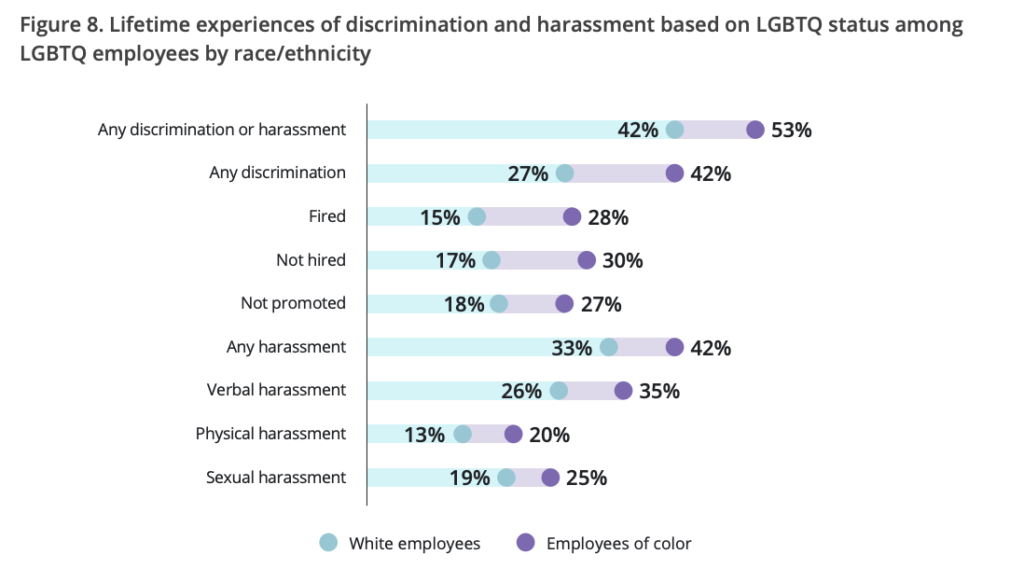
Source: Williams Institute, LGBTQ People’s Experiences of Workplace Discrimination and Harassment 2023
The money is tight
While countries like the UK require annual gender pay gap reporting by companies, this is only restricted to gathering information on salary gaps between men and women. The lack of official numbers on these discrimination patterns worldwide lead organisations to shirk accountability in solving systemic issues which very much affect the lived realities of their workers.
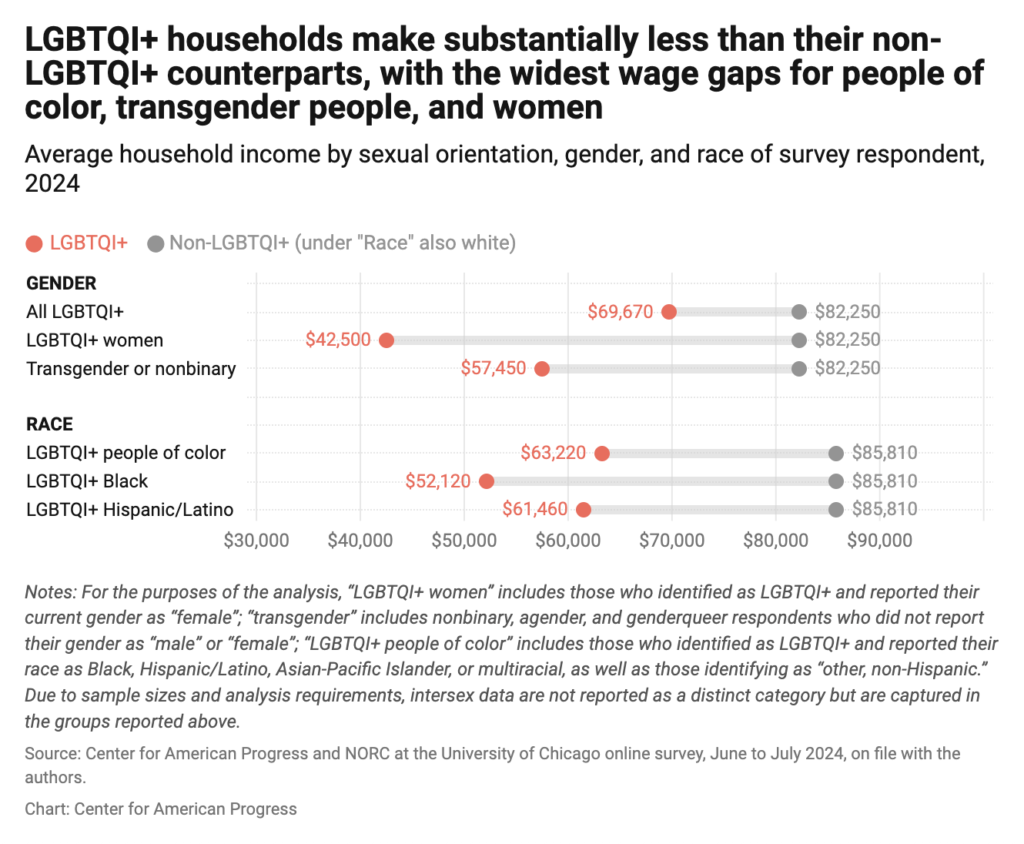
Source: Center for American Progress’ LGBTQI+ Community Survey, The 2024 LGBTQI+ Wage Gap
In one case a trans worker was outed at work, faced months of discrimination and harassment such as invasive questioning and was ultimately fired, putting their livelihood at risk.

Sexual misconduct is an everyday reality
When a culture of discrimination gets ingrained in a company’s DNA over years of oversight, everyday microaggressions and blockers to promotions, turn into serious safety risks for LGBTQIA+ employees. As per a study, the biggest reason for a transgender employees to avoid seeking employment in certain industries were concerns over safety.
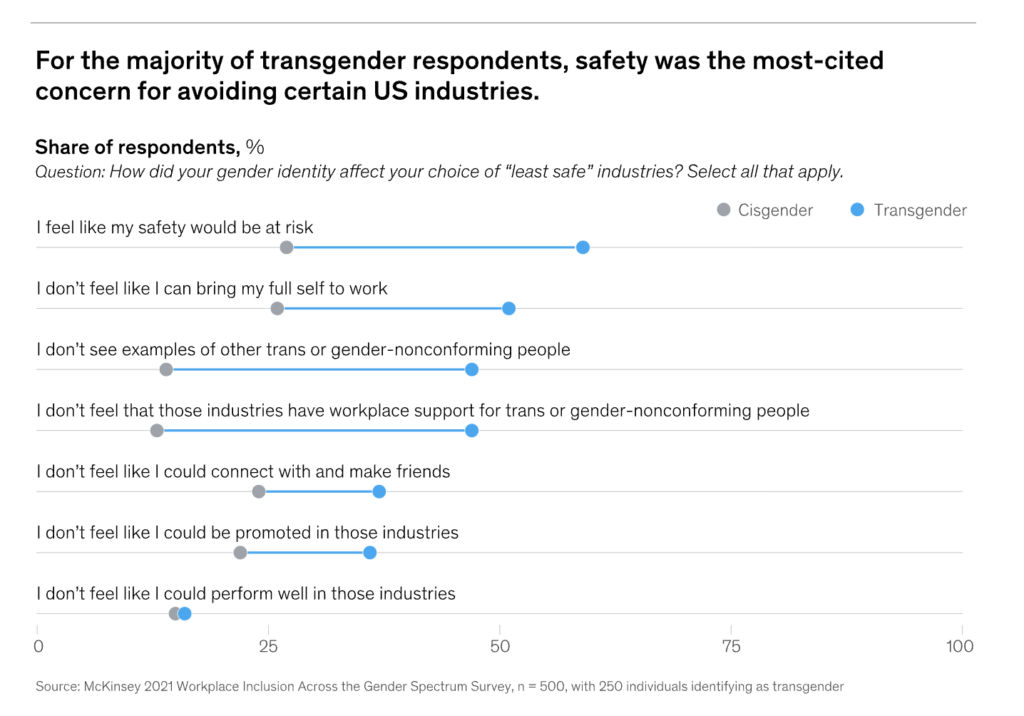
Source: McKinsey, Being transgender at work
As per a University of Sydney study 77% of young LGBTQIA+ workers reported facing workplace sexual harassment. Trades Union Congress in the UK found that 7 out of 10 (68%) of LGBTQIA+ respondents had experienced at least one form of sexual harassment at work. This includes multiple types verbal and digital sexual misconduct.
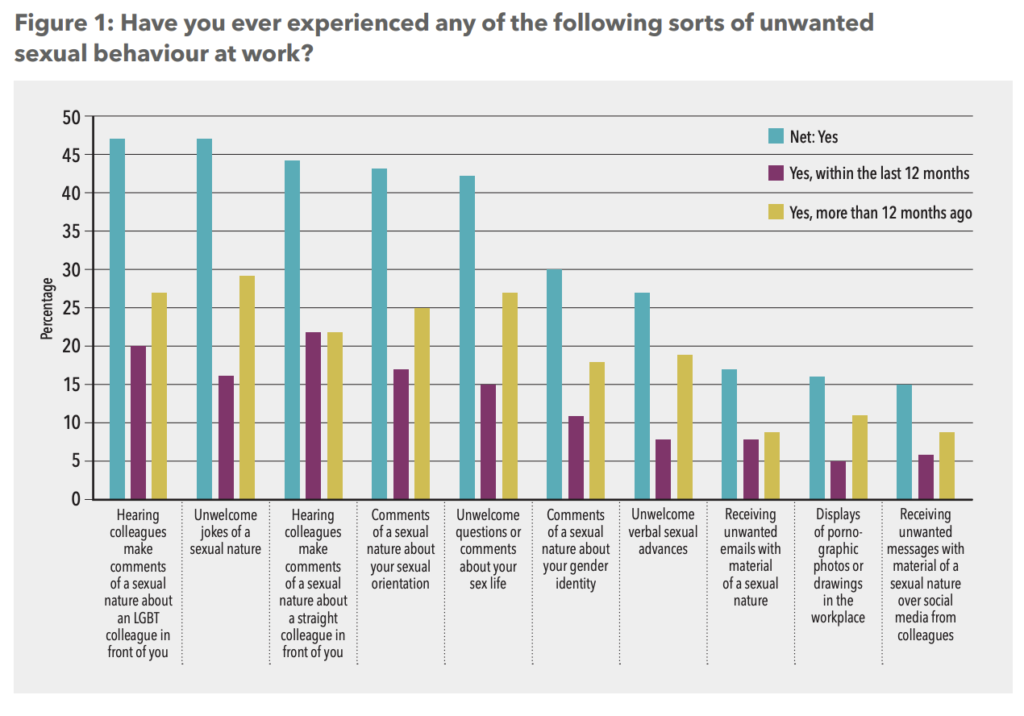
Source: TUC, Sexual harassment of LGBT people in the workplace
Alarmingly, incidence of more serious physical misconduct like sexual assault and even rape is also quite high.
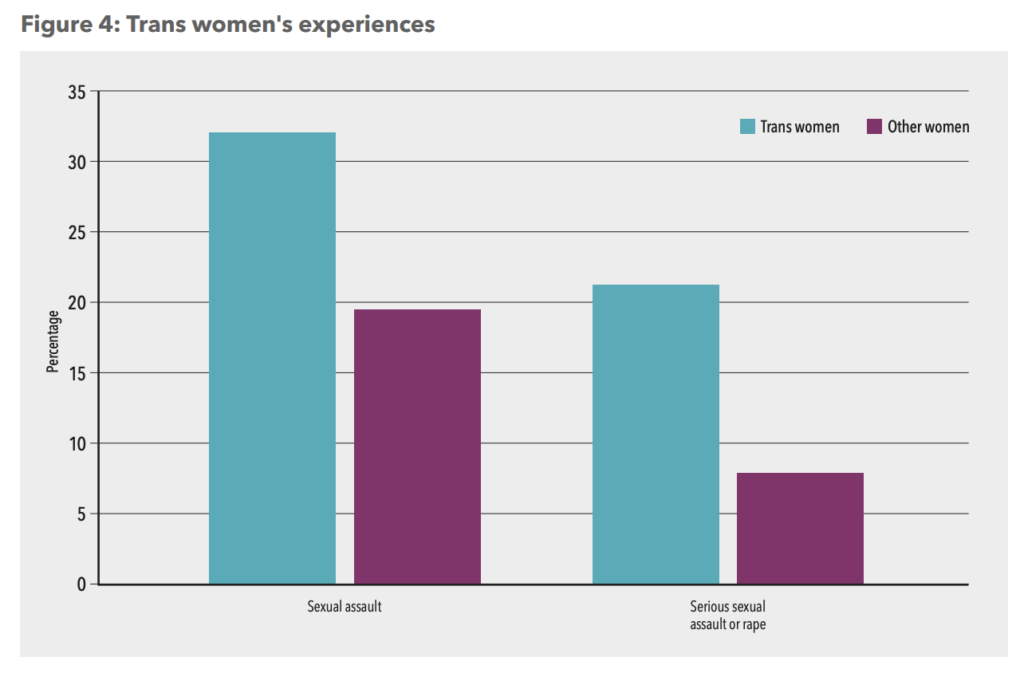
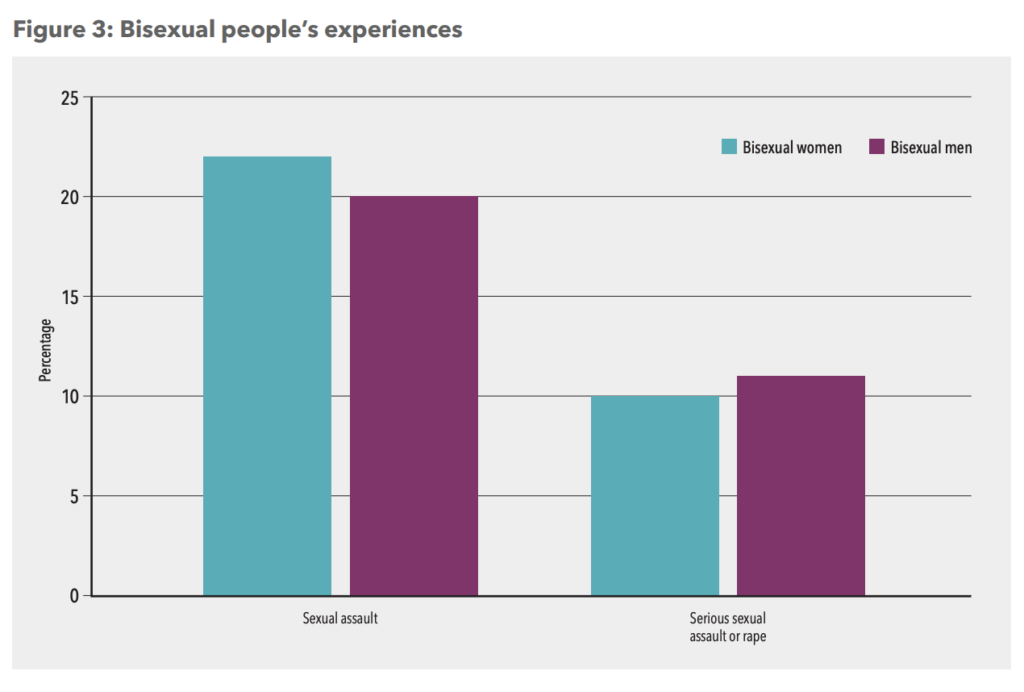
Source: TUC, Sexual harassment of LGBT people in the workplace
Despite this, a majority of LGBTQIA+ victims never reported these incidents.
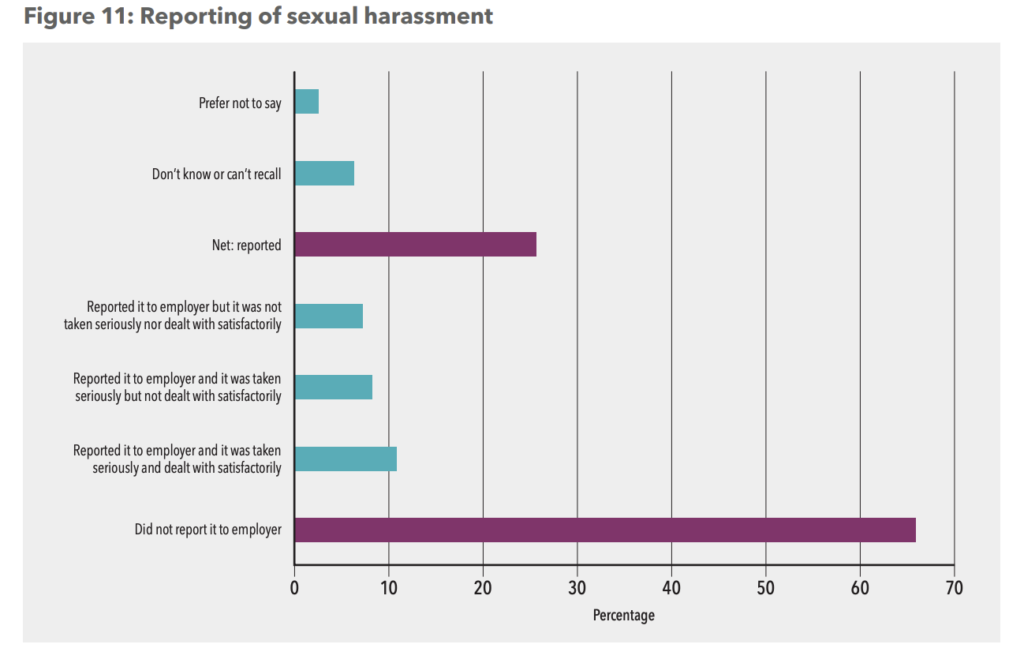
Source: TUC, Sexual harassment of LGBT people in the workplace
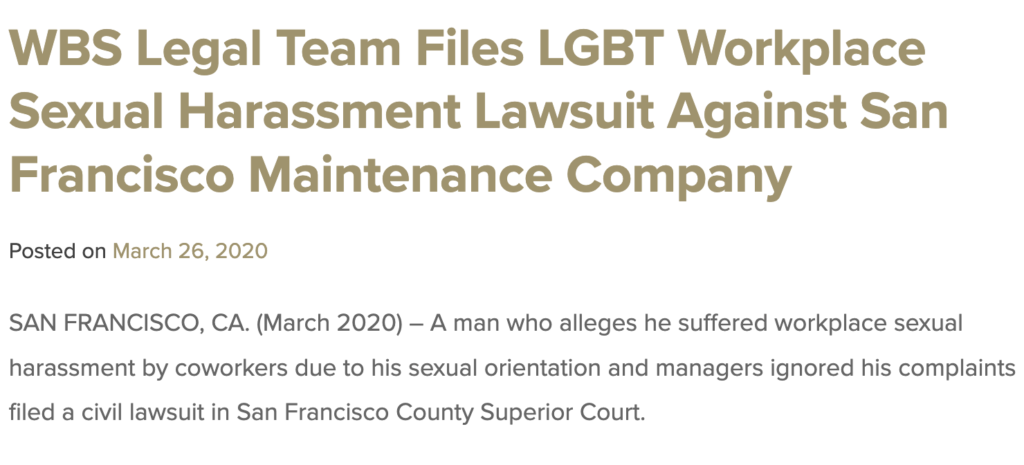
This is no surprise as LGBTQ workers expect less fairness from employers, anticipate bias in sexual harassment investigations or are sure that they will be outrightly ignored. News headlines confirm their fears.
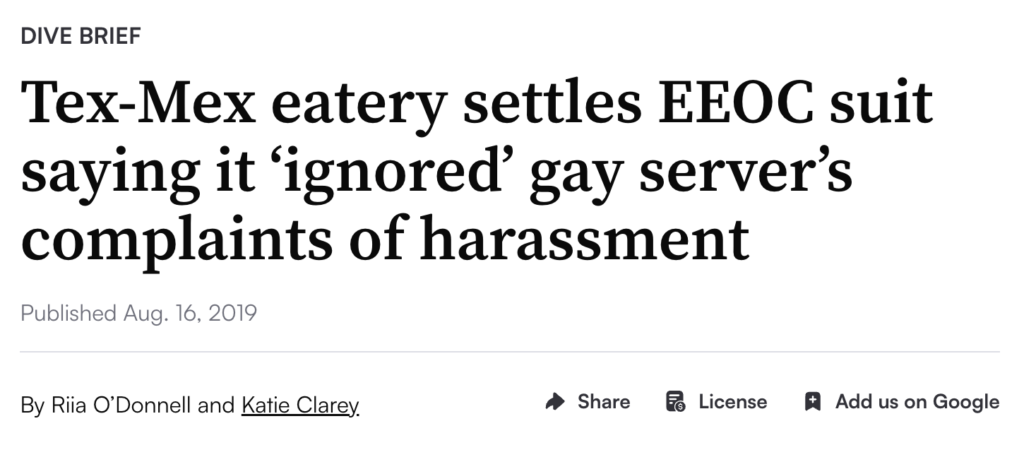
Organisational risk under your nose
Companies have for years brushed misconduct and discrimination complaints from LGBTQIA+ workers under the rug. Of course this has driven away talented LGBTQIA+ workers. But it has also cost organisations millions in legal fees and fines.
In 2020, the US Supreme Court ruled that the 1964 Civil Rights Act also applied to gay and transgender people, protecting them against workplace discrimination. In the UK, worker rights against harassment and misconduct are protected by the Equality Act 2010. The EU mandates companies in member states to prevent harassment and discrimination on the grounds of protected identities like sexual orientation. The list of companies worldwide legally prohibiting workplace harassment is massive and so is the number of companies who have paid dearly for non-chalantly crossing the red line.
It is not worth spending chunks of your revenue annually just because of bias. Especially when the flipside is so lucrative. Defeat LGBTQIA+ bias, establish fair channels of harassment reporting and retain valuable talent with Serein’s guidance. Reach out at hello@serein.in.