






Welcome to another week of Data Digest. Our focus this week: are our workplaces built for people with disabilities (PwD).
And no, I will not really talk in depth about the physical manifestations of exclusion for PwD employees in our workplaces.Lots of studies point to how seemingly mundane things in offices that people without disabilities have built their routine around, pose a real challenge to their colleagues with disabilities. Think about that long commute to work, regular washrooms that do not account for disability, particular kinds of lighting and sound levels that affect people with neurodivergence.
Getting hired is tough
Even without these physical barriers, people with disabilities face some formidable issues in today’s labour market. Accenture accumulated some data to point out the impossible situation that PwD workers face. The study, spanning across the globe, found that people with disabilities are considerably less likely to be employed. When they are hired, companies find it hard to retain them.
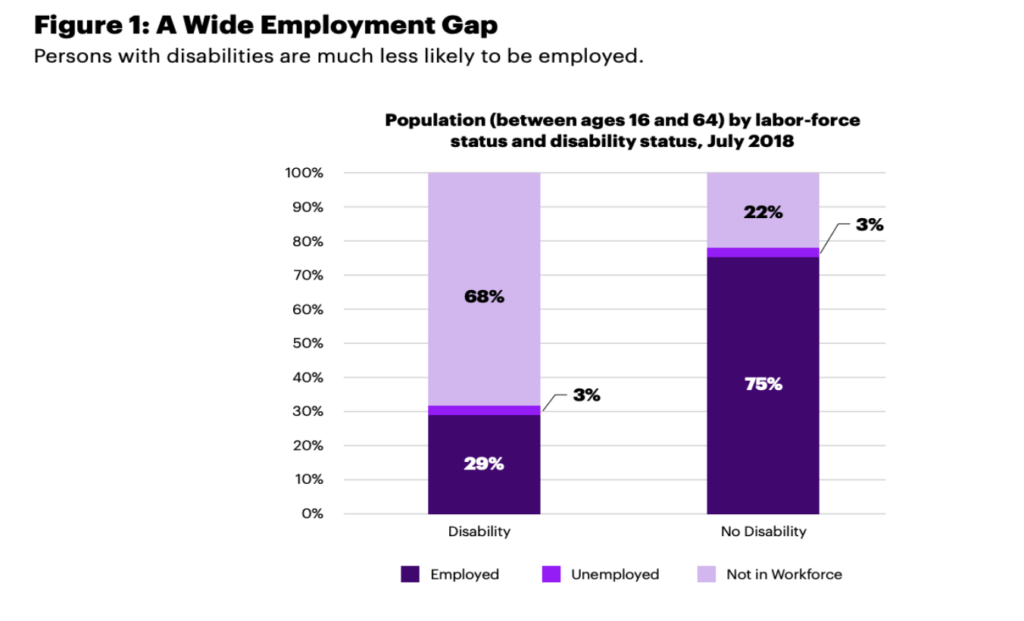
Source: Accenture, Enabling Change Getting to Equal 2020: Disability Inclusion
This is not a small oversight, it is a form of structural exclusion that deliberately excludes them from the labour market, due assumptions of their capabilities. Employers seem to have pre-conceived notions about the value that employees with disabilities bring, as well as underestimating the size of the labour market associated with them. They clearly have not seen the evidence that argues against this. Studies estimate that if just more than 1% more disabled people entered the US workforce, the economy would gain 10.7 million workers and $25 billion in increased GDP.
So, companies are missing out on priceless productivity by refusing to even consider a chunk of available talent.
The unmatched bias
Including barriers to employment, disabled employees within a company face various forms of discrimination and bias.
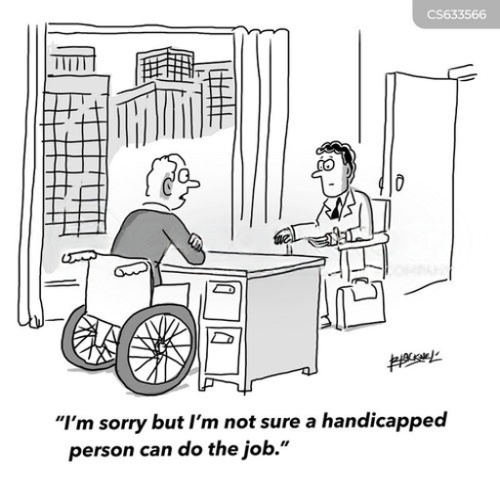
The stigma around disability at work is very real. In a 2024 Deloitte study 41% of respondents say that they have experienced either microaggressions, harassment and/or bullying at work over a period of 12 months. This shunning by teams takes a massive toll of employees with disabilities and their sense of belonging. Very few end up feeling like they are a part of any real decision making, hesitate to voice their opinions and generally feel ignored by colleagues. Since employees with disabilities do not feel safe to engage more actively with their teams, employers assume they are not valuable. This creates a vicious cycle.
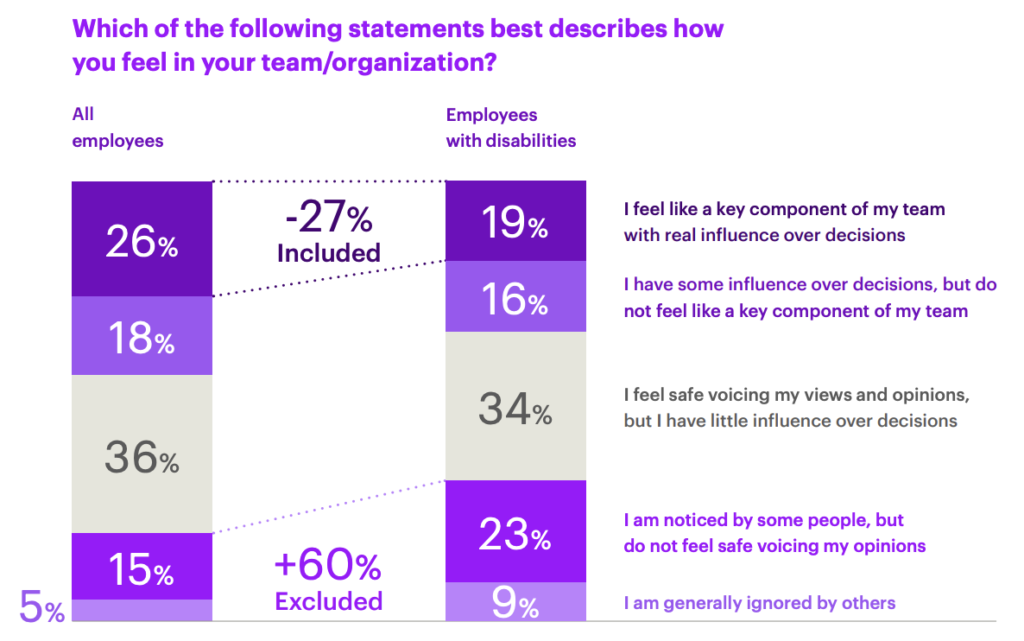
Source: Accenture, Enabling Change Getting to Equal 2020: Disability Inclusion
No organisational support
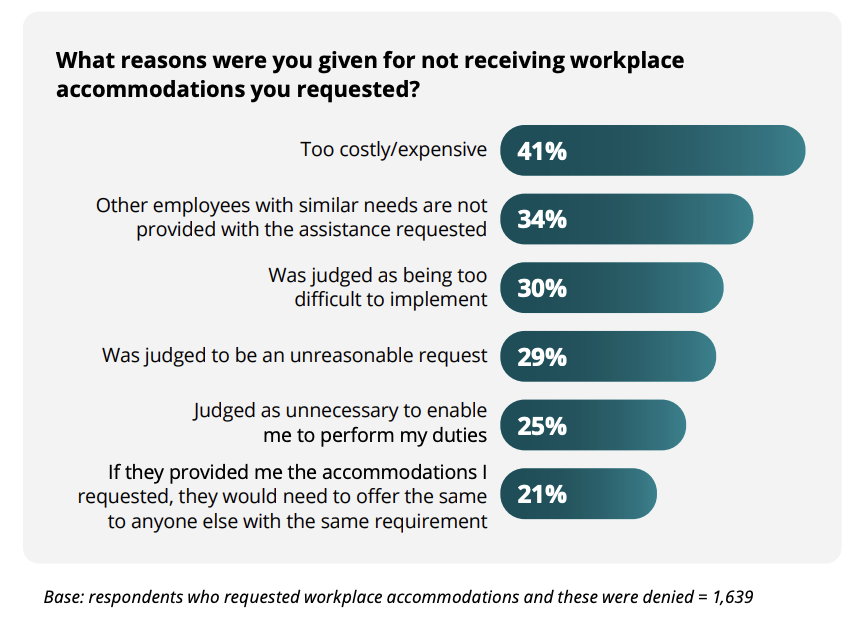
Without robust protective measures and support from employers, such biases and acts of discrimination against employees with disabilities are only further perpetuated. This organisational apathy is laid bare by the high percentage of rejections that PwD employees get when requesting accommodations at work.
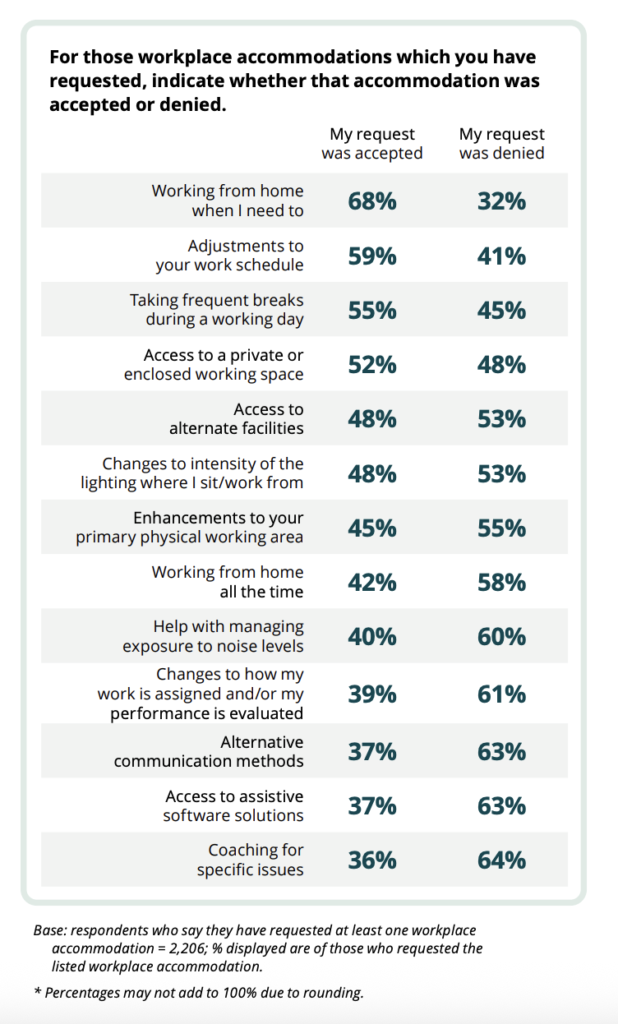
Source: Deloitte, Disability Inclusion @ Work 2024: A Global Outlook
Among the common reasons cited for such denial of support, “too costly” ranks the highest. This is followed by “other employees with similar needs not provided with similar assistance”, “difficult to implement”, “unreasonable request” and more.
Source: Deloitte, Disability Inclusion @ Work 2024: A Global Outlook
Another area of structural discrimination for PwD workers is in pay gaps. The International Labour Organisation (ILO reports that people with disabilities are paid 12% less per hour across the globe. This reality coincides with the fact that PwD workers incur higher living expenses due to their specific needs. This pushes them in larger numbers toward poverty and exploitation in terms of accepting hostile work conditions and predatory employment contracts.
The Covid-19 pandemic, that closed down physical offices, interring employees into months of work-from-home set ups brought a ray of hope. Companies awoke to the needs of their PwD staff while scrambling to set up accommodations for their whole workforce, who now were suddenly expected to work with previously unknown limitations. Companies who build systems of support for their PwD employees received public praise, motivating others to take similar routes. But while awareness of these issues did pick up, experts say that real action on the ground remains patchy.

Why companies need to care
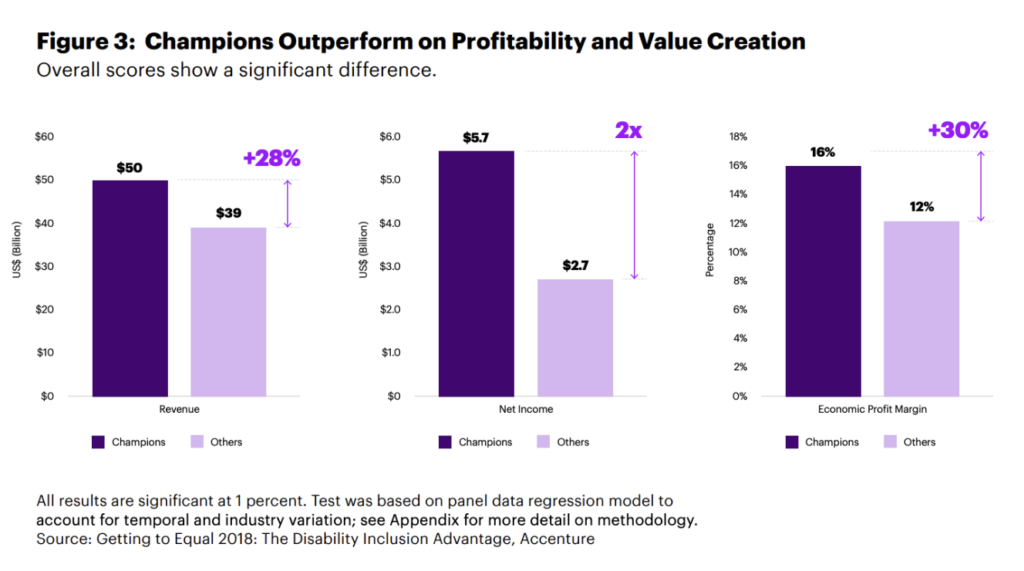
When workers leave, the costs land on companies. It leads to a loss of expertise, negative workplace culture and repeated hiring cycles. Research from the beginning of this millennium estimated global costs of disability exclusion at $1.4-1.9 trillion annually. 25 years later you can imagine how far this number would have inflated, showing the lost potential of workers with disabilities. If companies were willing to provide the necessary support, their PwD would feel much more confident to contribute, perform and put organisations at a stronger competitive footing.
Source: Accenture, Enabling Change Getting to Equal 2020: Disability Inclusion
This video by DW News pretty much sums up the gains waiting to be reaped when companies truly embrace disability inclusion:

Serein helps companies harness the full potential of their workforce, enhance the productivity of your diverse workforce and stay ahead of the curve. Write to us at hello@serein.in.