






Welcome to another week of Data Digest, and this time we tackle: is unaddressed workplace harassment making your teams unproductive?
Alarming numbers on the workplace front point to a brewing global epidemic of sexual harassment in offices. The demographics of the people being targeted primarily, points to a close link between workplace sexual harassment and power dynamics among colleagues.
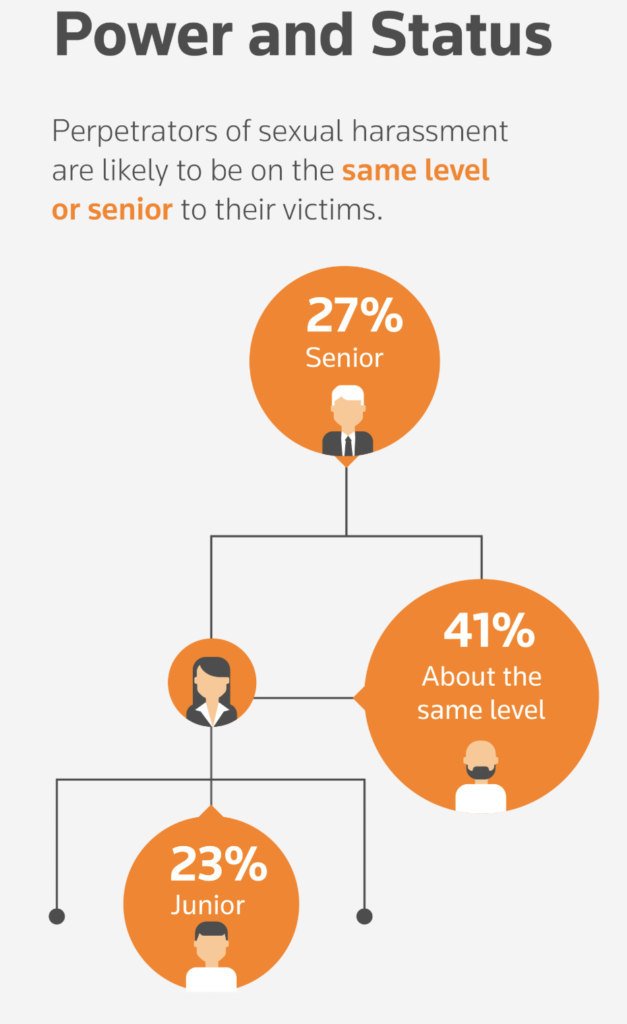
Source: Thomas Reuters, Sexual Harassment in the Workplace
Younger workers are also more susceptible to workplace harassment and violence than their older colleagues.
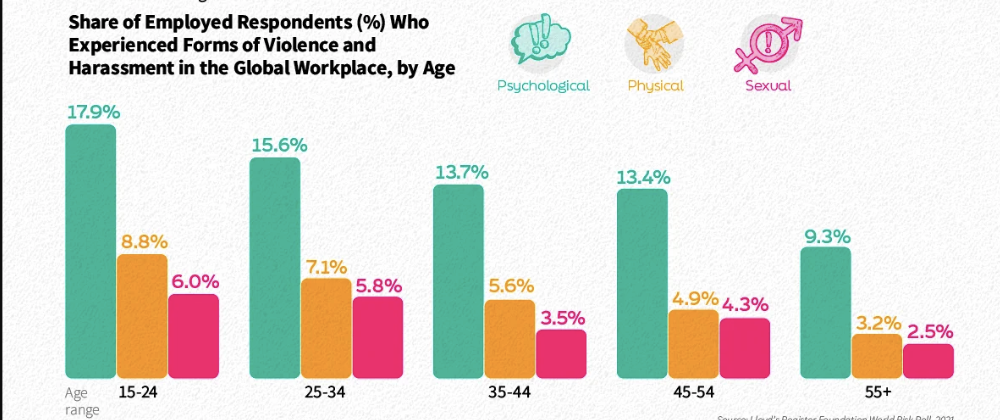
Source: Lloyds Register Foundation
Ground zero of this workplace epidemic
One troubling reason for the growing number of sexual harassment cases in workplaces is the abject lack of awareness and sensitivity towards this issue among employees. In the US, 81% of women have faced some form of sexual harassment. When men were asked to put a number to how many women may have had to deal with such incidents, they put the number much lower at 44%.
Another issue here is also the lack of reporting due to fears of retaliation.
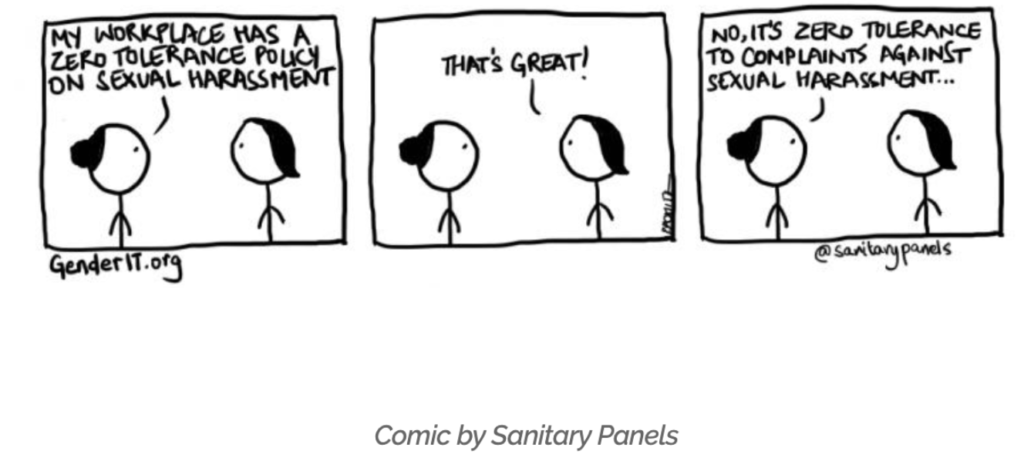
An International Labour Organisation (ILO) report found that only half of the respondents surveyed had disclosed incidents workplace sexual harassment, and only when such incidents occurred more than once. Furthermore, respondents were more likely to disclose such incidents to friends or family members rather than their employer. The primary barriers to disclosure were perceived or real fears of retaliation.
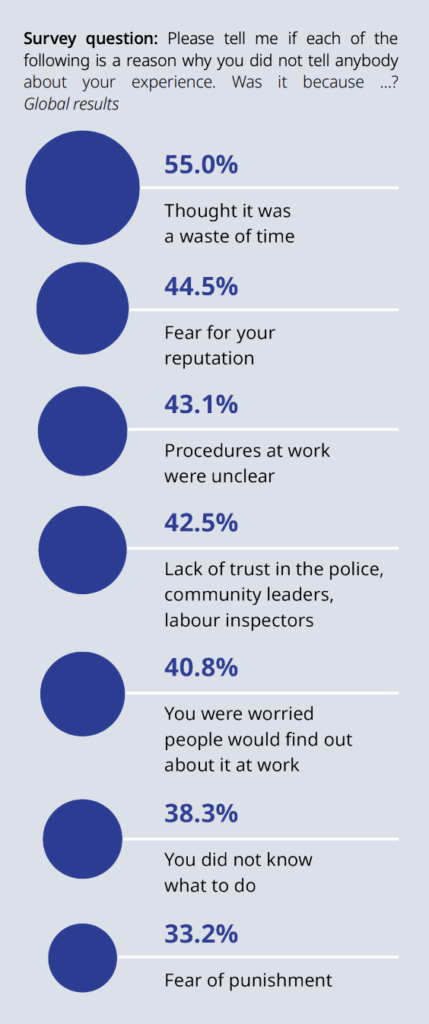
Source: ILO, LRF, Gallup, Experiences of violence and harassment at work: A global first survey
Legal frameworks without organisational enforcement
Globally, most countries have enacted some form of legal provisions to protect their labour from their incidents and give them clear channels to have these issues addressed.
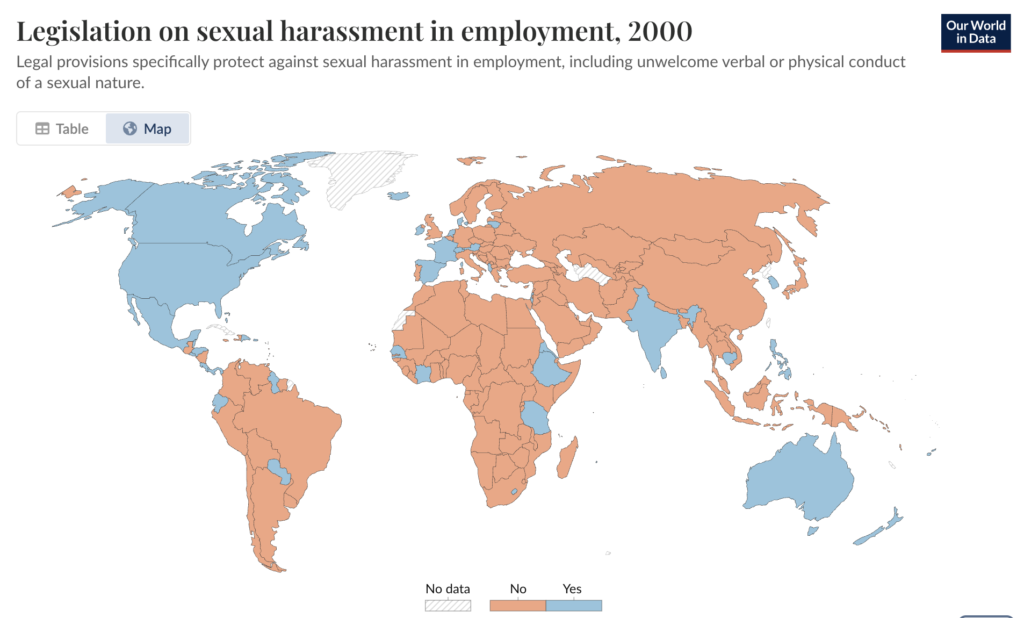
But companies have not kept up. Around 75% of workers in the US were hesitant to report sexual harassment due to lack of trust in their organisations and fears that their complaints will not be taken seriously. This can be due to the lack of clear systems of reporting, historical cases of retribution against complainant or a sustained ignorance of leadership to unsafe work cultures.
What companies are risking with complacence
A work environment that is riddled with sexual harassment, where employees take this to be a fact and turn a blind eye to misconduct for fear of retaliation, is bound to have low psychological safety. Psychological safety is the belief that you will not be punished or humiliated for speaking up with ideas, questions, concerns, or mistakes.
Sounds too high level?
Imagine a person is facing sexual harassment at work. They are hesitant to speak up because of manager and peer apathy. They do not know the right channels to escalate this with the HR that can ensure them protection from retaliation and a fair investigation. Colleagues tell them that these kinds of incidents are common at work and they should not take it to heart. Eventually the mental distress of this situation will overpower this person and lead them to detach from work and their team, their performance will fall and they will exit the organisation.
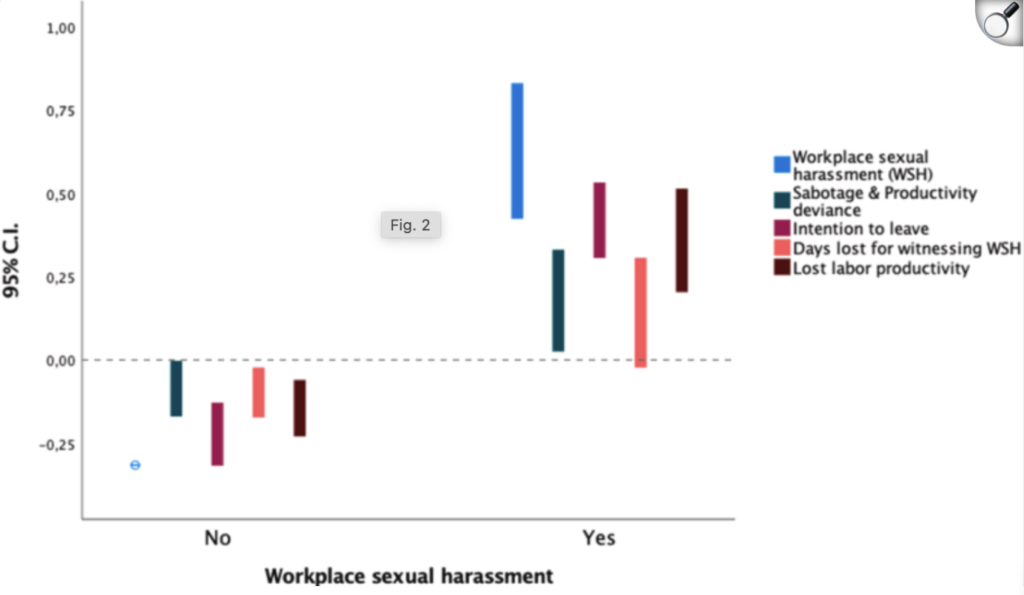
This is not merely an anecdote. Numbers bring it to reality. Studies have a strong correlation workplace sexual harassment and decreased labour productivity. This shows that ignoring sexual harassment actually harms companies, not just victims.
A survey conducted by the ILO shows that sexual harassment can affect employee confidence and trust in the company, encouraging them to leave their roles. This affects the team output when high-performing employees leave suddenly, requiring time-consuming restructuring and effort spent on training new hires.
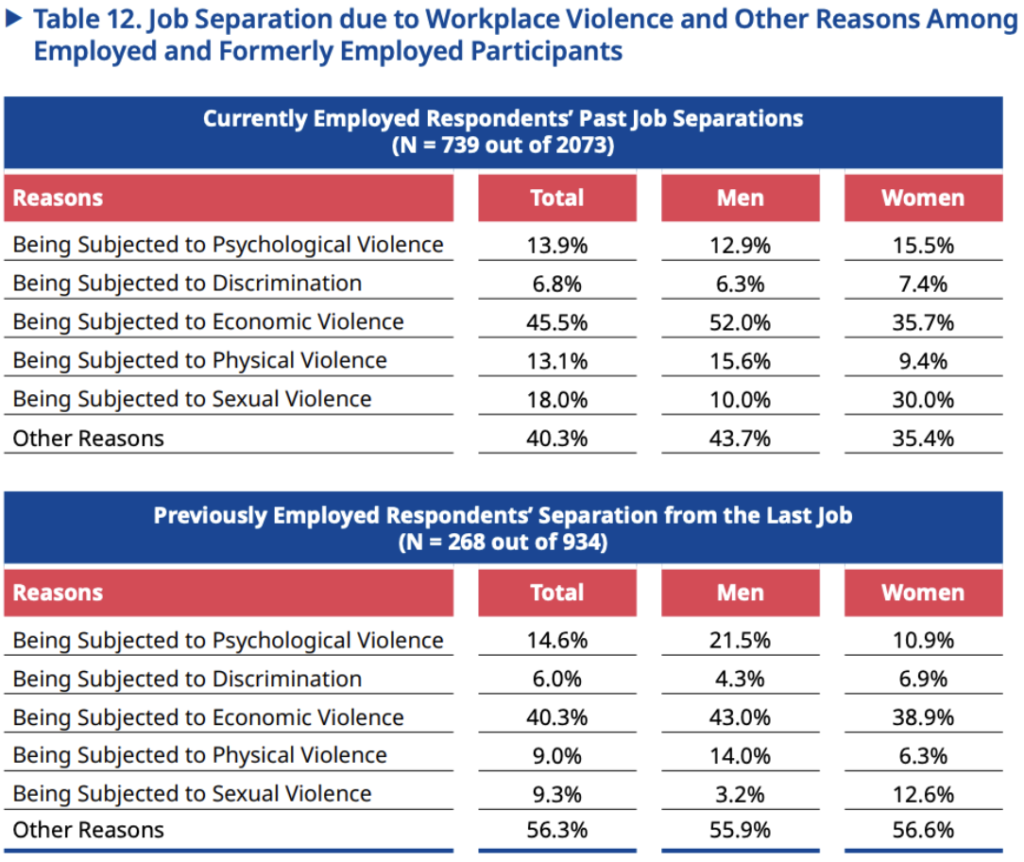
When organisations have an entrenched harassment-prone work culture over years, this effect gets multiplied across countless teams and employees bringing down overall growth. In the age of social media, this is also a slippery slope where anonymous posting on channels can impact their companies’ reputations in the eyes of potential clients and future employees.
Serein helps companies build robust systems of harassment reporting and redressal as well as policy frameworks that guide culture change. Our anti-harassment trainings are scalable and customisable for global teams. Reach out to us at hello@serein.in for a consultation.